Colostrum – baby’s first superfood

Colostrum – baby’s first superfood

Resource type: Article

Undecided how to feed your baby? Not sure that you want to breastfeed? This article is for you.

We understand, it’s a big decision with so many factors that are completely personal to you, your family, culture and those around you. Lots of things influence your decision on how to feed your baby. That’s why being well informed and making the right decision for you is so important.

To help you make your decision, you may want to look at this NHS page on the benefits of breastfeeding and take a look at the “Human Milk, Tailor-Made For Tiny Humans” advert.

Colostrum – baby’s first superfood

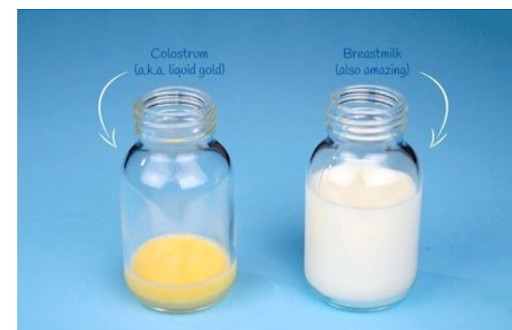
Even if you’re undecided about breastfeeding, consider giving your baby the first milk – colostrum. We know it’s so important for your baby as it:

  • It’s like their first immunisation – providing vital antibodies (protective factors). In fact, colostrum is super concentrated with these immune properties and is less about nutrition and more about protecting baby.
  • It is a living fluid, containing stem cells that can change into other bodily cells (such as brain cells, fat, bone, liver) and act as a repair system (that’s why some people choose to collect stem cells from the placenta for later in life!).
  • It is a laxative and helps get the baby’s bowels moving, flushing out the first meconium poo and excess red blood cells. This helps to reduce the chances of your baby becoming jaundiced in the days after birth, as their immature liver can struggle to process these excess blood cells, but frequent pooing helps them pass through their system.

Paints baby’s gut and helps the development of the microbiome – a healthy microbiome helps prevent diseases in later life.

No matter how the baby is born or how you choose to feed, many babies will be placed on your chest after birth, as we know how important it is for them to ease their transition to earth side.

When baby is placed in skin-to-skin contact with you following the birth, they will want to quietly rest for a while (it’s been a hard journey to meet you), so expect them to want to watch you and take in your face, matching it to your voice – hello baby!!

Sometime in that first hour after birth they will want to feed; it helps their transition to the world if this is also done in skin-to-skin contact. Babies will latch to the breast and take in some super concentrated colostrum (your first milk). If you’d prefer not to put baby to the breast, you could hand express and feed to baby in a syringe or plastic spoon.

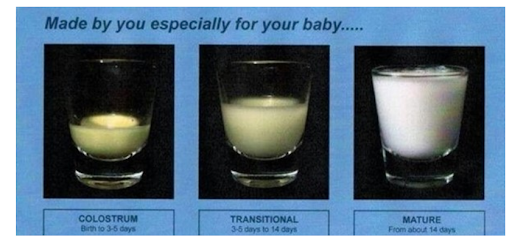
You can keep offering this colostrum to baby either directly at the breast or by hand expressing it (if you’re still not sure that you want to breastfeed). Colostrum is so concentrated it can stick to a breast pump making it hard to collect. When your milk starts to change (from around 30 hours after the birth) it becomes larger in volume – you can start to use a breast pump to bottle feed baby if this is your choice or continue to put baby to the breast.

**Colostrum and your changing/transitioning milk is perfectly tailored to your baby; meeting their requirements for growth and nutrition as their tummy size and needs grow**

Need support with infant feeding?

Whether you’re breastfeeding, formula feeding or combination feeding, our Infant Feeding Team offers friendly, evidence-based advice to help you and your baby get off to the best start.

Infant Feeding

Need to contact us?

If you’re a parent, carer or professional looking to refer a family for extra support, our Health Visiting and Family Nurse teams are here to help.

Contact us

Here to help serve our community

We work throughout Solihull

Supporting families across Solihull with trusted health advice and care — from birth through to young adulthood.